
The
Furrow Autumn
2001/Winter 2002 |
||||
| "Shaking Off the Shackles of Manual Toil" - The Story of the Binder | ||||
| Part 1 | Part 2 | Part 3 | ||||
|
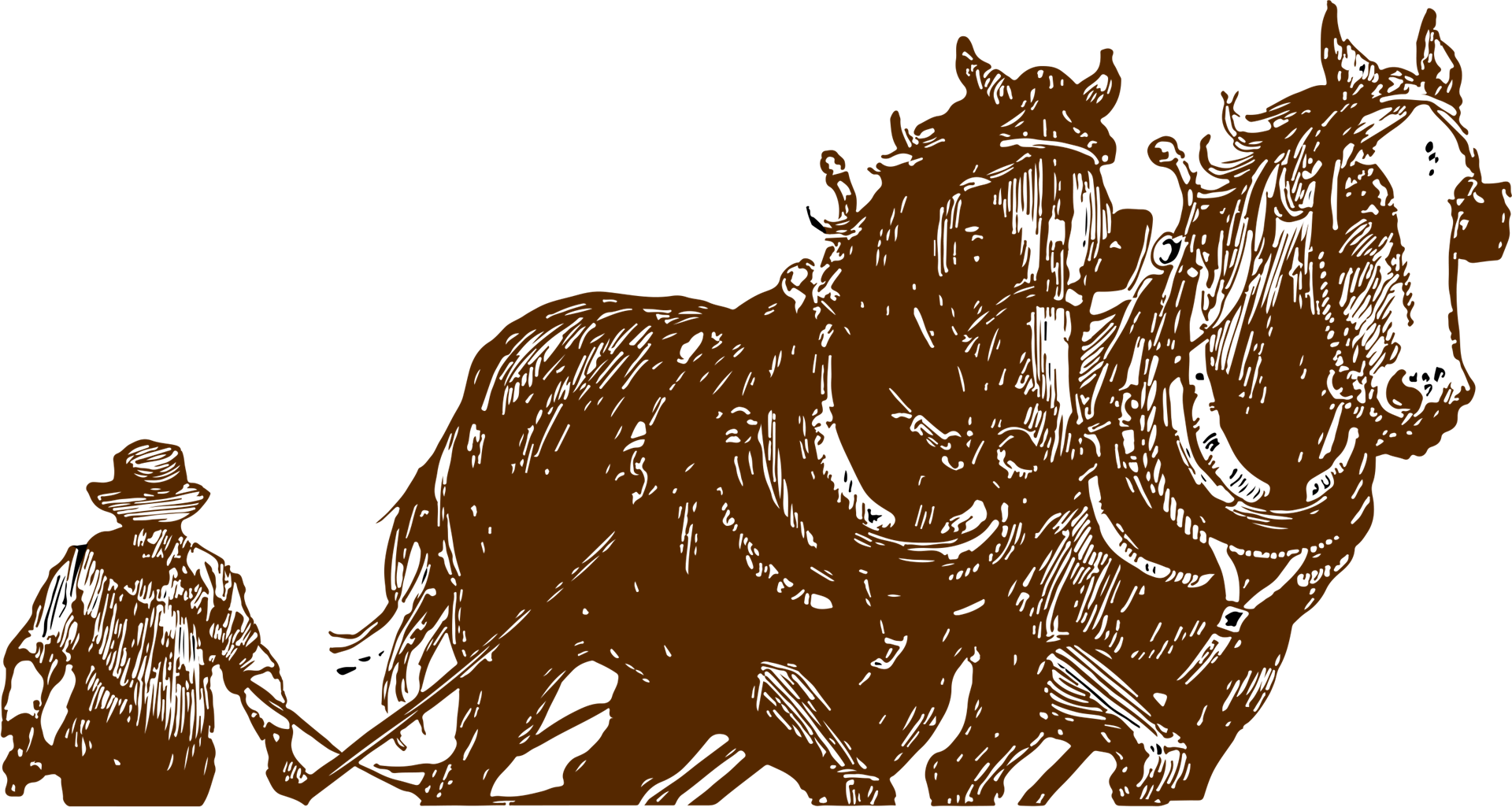
Part 4 The emergence of the binder changed much more than just how farmers harvested wheat. Contrary to popular myth, American farmers for the most part had never been true subsistence farmers but had always produced something for the market. During the 19th century virtually all farmers began to produce primarily for the market while many continued to grow some produce for their own families. The binder was right at the center of this change. Remember that the limiting factor in the number of acres a farmer could devote to wheat was the ability to harvest it in the short time available. A single binder couldn't do much more than what a crew of 14 men using cradles could do, but a crew of 14 men using several binders could greatly increase the daily harvest. Wheat production shifted from the east to the larger fields of the west during the century. By 1900, farms in New Jersey, like Howell Farm, were still growing wheat on smaller acreages and were using binders because they cut down on labor needs and therefore saved them money. Farmers in these more marginal areas often shared a binder among several families. The binder was also symbolic of the 19th century shift in animal traction power from oxen to horses. Other animal powered field machines used to prepare the ground, plant, cultivate, and harvest other crops were also invented to complement the small grain reaper and binder. As more acreage could be harvested, more land could be planted and machines had to be developed to help farmers cope with these tasks on larger acreages. The oxen that had been useful when farmers walked behind their plows and cultivators gave way to the faster, steadier, and more nimble horses as farmers learned to ride their machines and farm sitting down. In 1900 farmers were on the verge of the next revolution in traction power when the gasoline powered "tractor" would provide even more "horsepower" to speed up operations and pull even heavier pieces of equipment, such as the combines that supplanted the binders. The use of machines like the binder also dictated where farming of particular crops thrived because the horse drawn machines worked best on flat or gently rolling terrain. As grain production shifted west, farming areas in the east that were more rugged or better adapted to smaller fields changed their focus to truck farming and dairying, a trend that was seen at Howell Farm, especially in the early 20th century. Helping to make possible the huge western farms, the binder was a keystone in the 19th century mechanization of farming in the west that contributed greatly to the overall economic growth of the U.S., the creation of an industrial workforce of excess rural workers and new immigrants, and the ability of America to abundantly feed its own urban population and sell its surplus to the world. The binder used on July 7th to cut Howell Farm's winter wheat represents the culmination in binder design that was so prevalent in the time period interpreted by the farm. It represents the efforts of a small army of inventors and visionaries all seeking to make life a lot less painful and who eventually succeeded in a way that also changed agriculture in unforeseen ways, including the huge reduction in the number of farmers and farm laborers needed to feed the country. While progress in solving the binder design problems probably seemed ever so slow and frustrating at the time, it has been pointed out that a farmer about 80-85 years old in 1900 and living on an eastern farm like Howell Farm could have experienced the whole process and witnessed or participated in harvesting by sickle, cradle, reaper, and finally the fully developed binder. The story of the binder is deeply embedded in the many threads of American History that help us understand what a place like Howell Farm was like in 1900 and why things are so different today. Scenes from the Howell Farm 2001 what harvest
|
||||
| Part 1 | Part 2 | Part 3 | ||||
|
This article first appeared in the Autumn 2001 and Winter 2002 editions of The Furrow, the quarterly newsletter published by the Friends of Howell Living History Farm. The contents are © 2001, 2002 The Friends of Howell Living History Farm. |